How to Design Packaging Solutions That Balance Customization and Future Flexibility
Introduction
When developing new packaging, brands often face an important question:
Should we create the most customized solution possible, or should we design for future flexibility?
The answer is not always one or the other.
A successful packaging solution needs to balance brand differentiation, manufacturing feasibility, supply chain reliability, and the ability to adapt as business needs evolve.
Good packaging development is not only about creating a beautiful container.
It is about making the right decisions today while keeping the right options available for tomorrow.
The Challenge of Over-Customized Packaging
Customization plays an important role in brand identity.
Unique shapes, special finishes, and customized components can help products stand out in competitive markets.
However, excessive customization can sometimes create unnecessary limitations:
- Dependence on a single supplier
- Higher tooling investment
- Longer development timelines
- Limited component alternatives
- More difficult future adjustments
A packaging design that only works under one specific condition may become challenging when market requirements change.
Designing Packaging With Future Flexibility in Mind
Experienced packaging development teams consider not only the first production run, but also future possibilities.
For example:
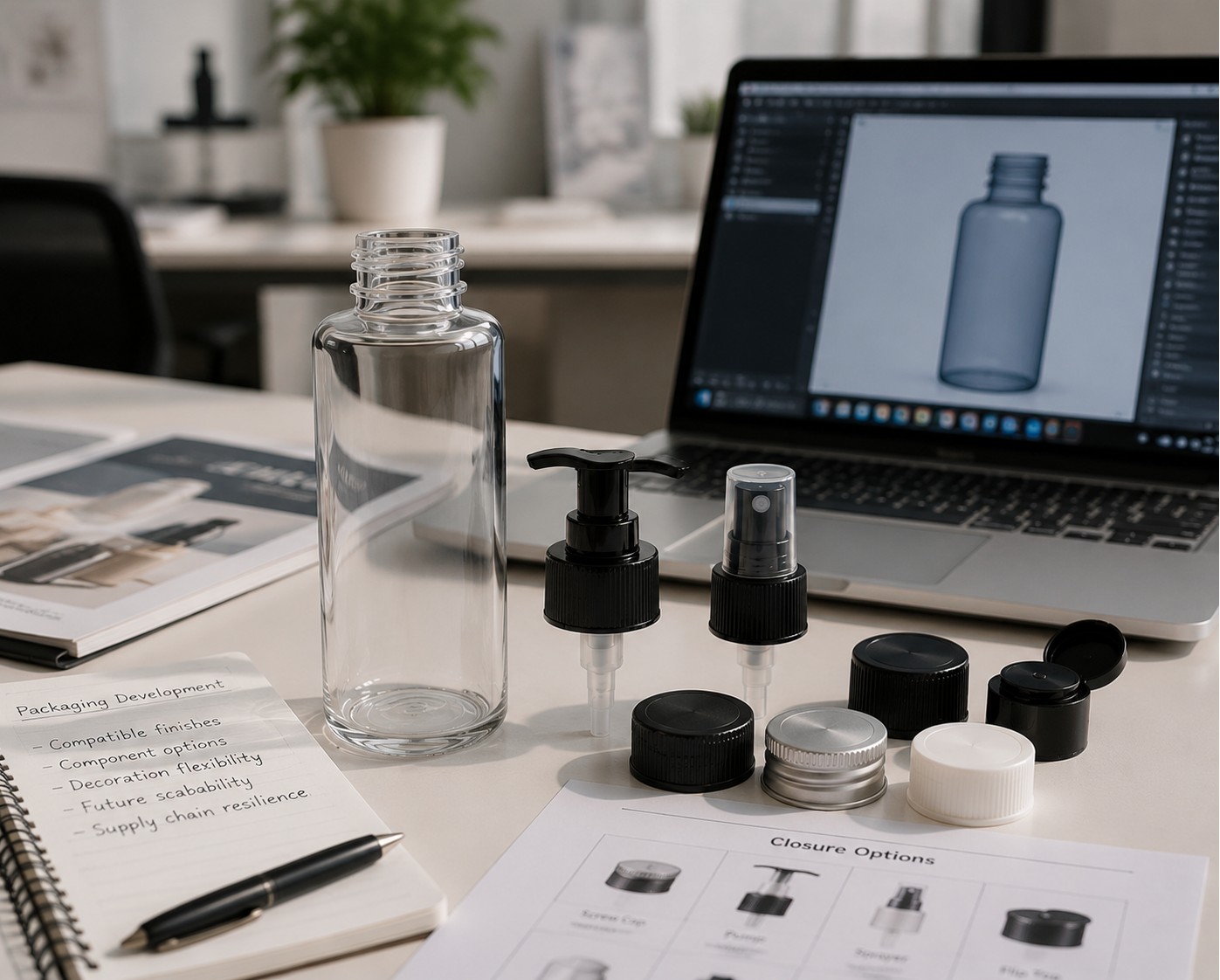
Compatible Neck Finishes and Closures
A bottle finish should support the intended application while considering available closure options.
Choosing a widely adopted finish can provide access to:
- Multiple cap suppliers
- Different dispensing systems
- Alternative sourcing options
- Easier future replacement
A well-designed packaging system creates choices instead of limitations.
Scalable Manufacturing Solutions
A packaging solution should not only meet current requirements.
Brands may experience:
- Increased demand
- New markets
- Different production locations
- Additional product variations
Considering manufacturing scalability early can reduce future challenges.
Decoration and Design Considerations
Decoration is an important part of packaging identity.
However, decisions around:
- Surface treatment
- Printing methods
- Coating
- Labeling options
should be evaluated together with production capabilities and future adjustment needs.
The most effective packaging designs provide both visual impact and practical flexibility.
The Role of a Packaging Development Partner
A packaging partner does more than provide bottles, jars, or components.
The real value comes from helping brands evaluate:
- What should be customized?
- What should remain flexible?
- Which decisions create long-term value?
- Which choices may create future limitations?
Through packaging design review, supplier evaluation, prototype validation, and production coordination, brands can move from concept to production with greater confidence.
Conclusion
The best packaging solutions are not always the most complex or customized.
They are the solutions that balance:
Brand vision today.
Supply chain flexibility tomorrow.
At SQF Packaging, we support brands with packaging development, supplier coordination, and production execution across rigid packaging solutions.
Because great packaging is not only about creating a container.
It is about creating possibilities.