Child-Resistant Caps and Closures: Sizes, Designs, Materials and Sourcing Guide
Child-resistant caps — commonly referred to as CR caps, child-resistant closures, or CRC closures — are widely used for packaging products where controlled access is important.
While the familiar push-down-and-turn mechanism may look simple, selecting the right CR closure involves much more than choosing a diameter.
Bottle neck finish, closure construction, liner, product compatibility, opening torque, color, decoration and regulatory requirements can all affect the final packaging system.
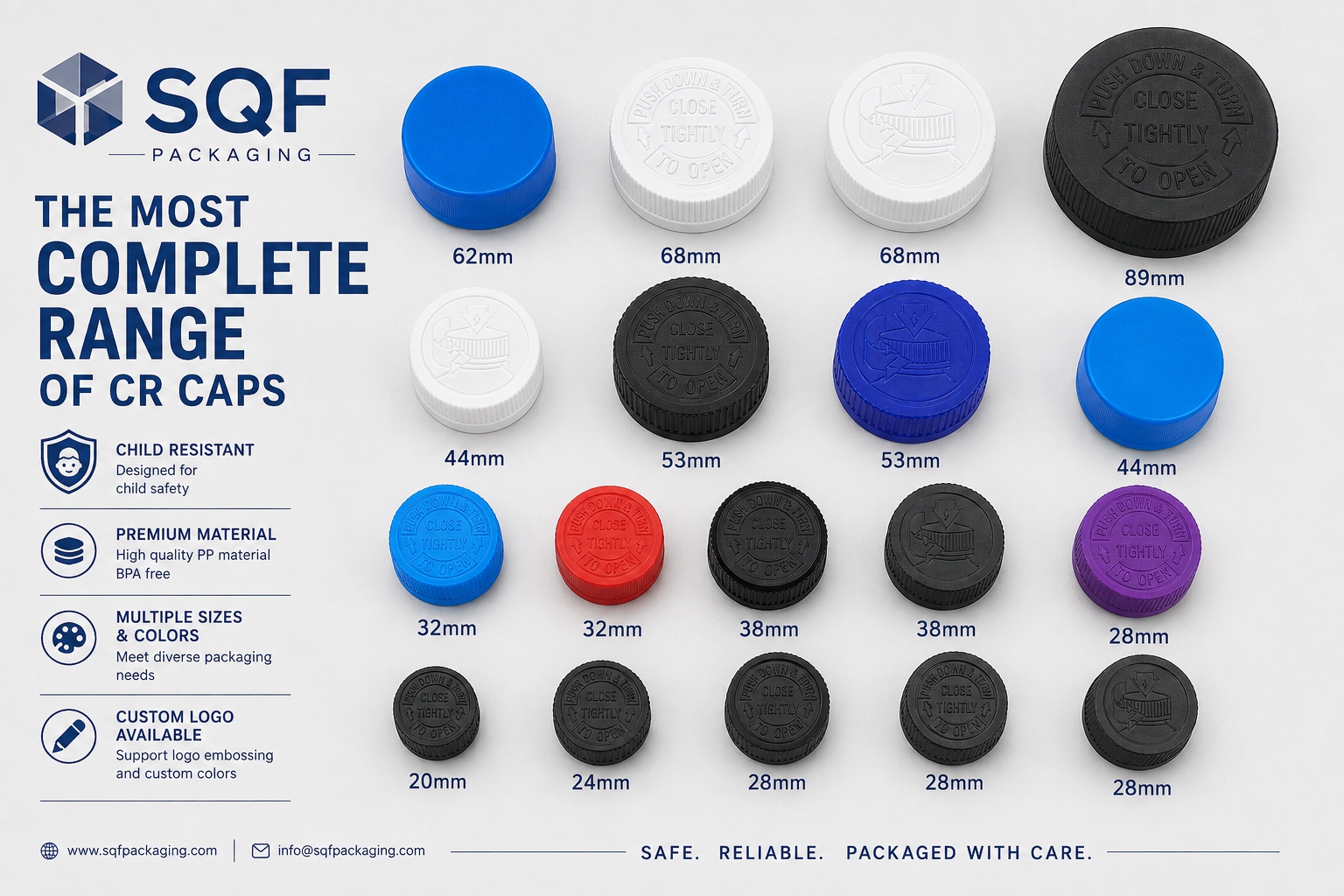
At SQF Packaging, we work with a broad range of CR closure sizes and configurations, from smaller 20mm and 24mm formats through larger 28mm, 32mm, 38mm, 44mm, 53mm, 62mm, 68mm and 89mm options.
What Is a Child-Resistant Cap?
A child-resistant closure is designed to make a package more difficult for young children to open while remaining usable by adults.
One of the most recognizable designs is the push-down-and-turn CR cap. The user applies downward pressure while simultaneously rotating the closure to disengage the locking mechanism.
CR closures can be manufactured in different constructions depending on the neck finish, container, application and required performance.
What Sizes Are Available?
There is no single standard CR cap size suitable for every container.
Common nominal closure diameters include:
20mm | 24mm | 28mm | 32mm | 38mm | 44mm | 53mm | 62mm | 68mm | 89mm
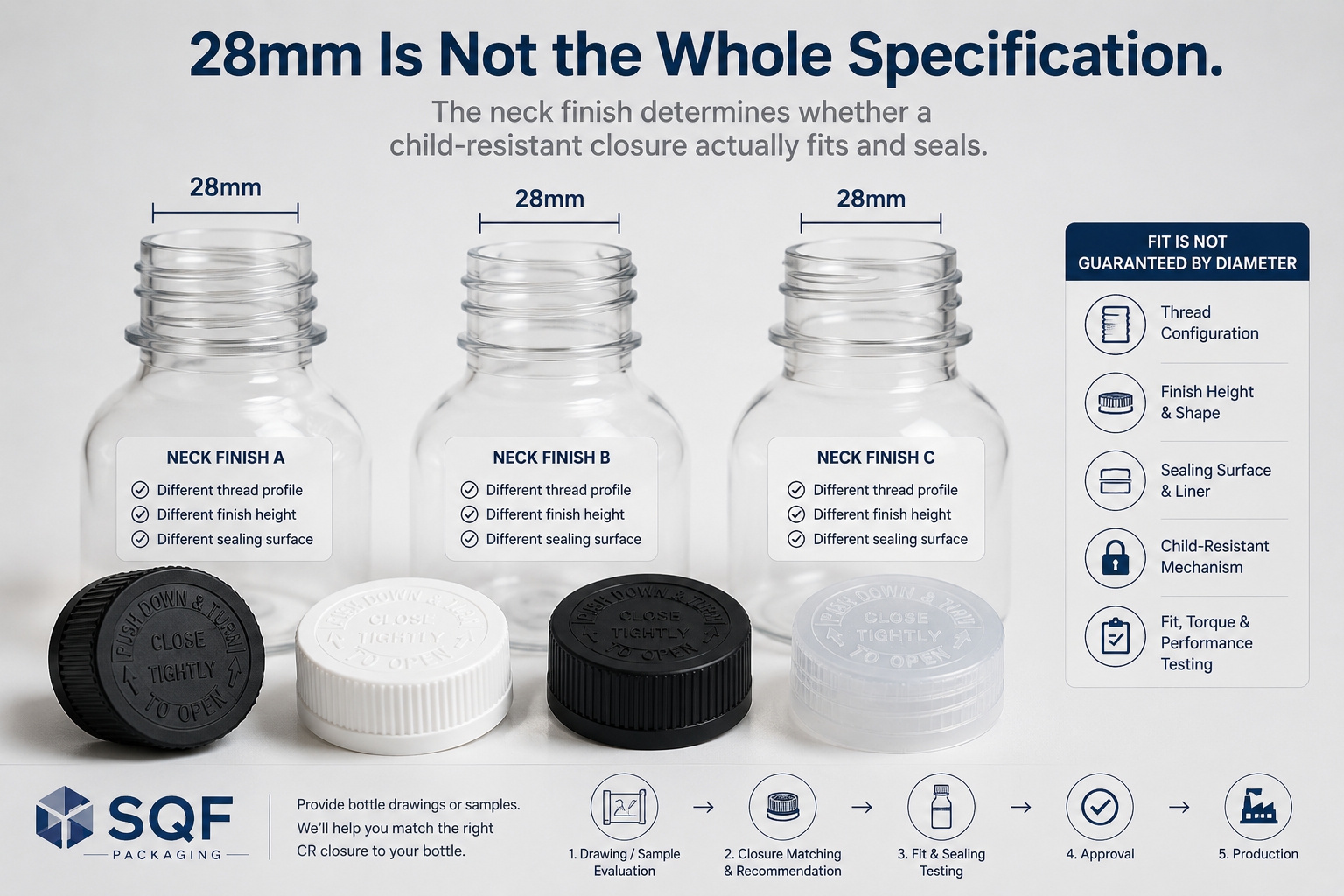
However, diameter alone is not enough to determine compatibility.
For example, two closures described as “28mm” may have different thread profiles, neck finishes or sealing systems. A closure therefore needs to be matched against the actual bottle or jar finish rather than selected by diameter alone.
This is one of the most important points when sourcing CR closures.
CR Cap Size vs. Neck Finish
When evaluating a child-resistant closure, buyers should ideally provide:
- bottle or jar drawing
- neck-finish specification
- opening diameter
- product/application
- required liner or sealing method
- preferred color
- estimated annual volume
When drawings are unavailable, physical bottle samples can often be used for compatibility evaluation.
Materials and Construction
CR closures are commonly manufactured using plastic materials such as polypropylene (PP), although construction varies by design.
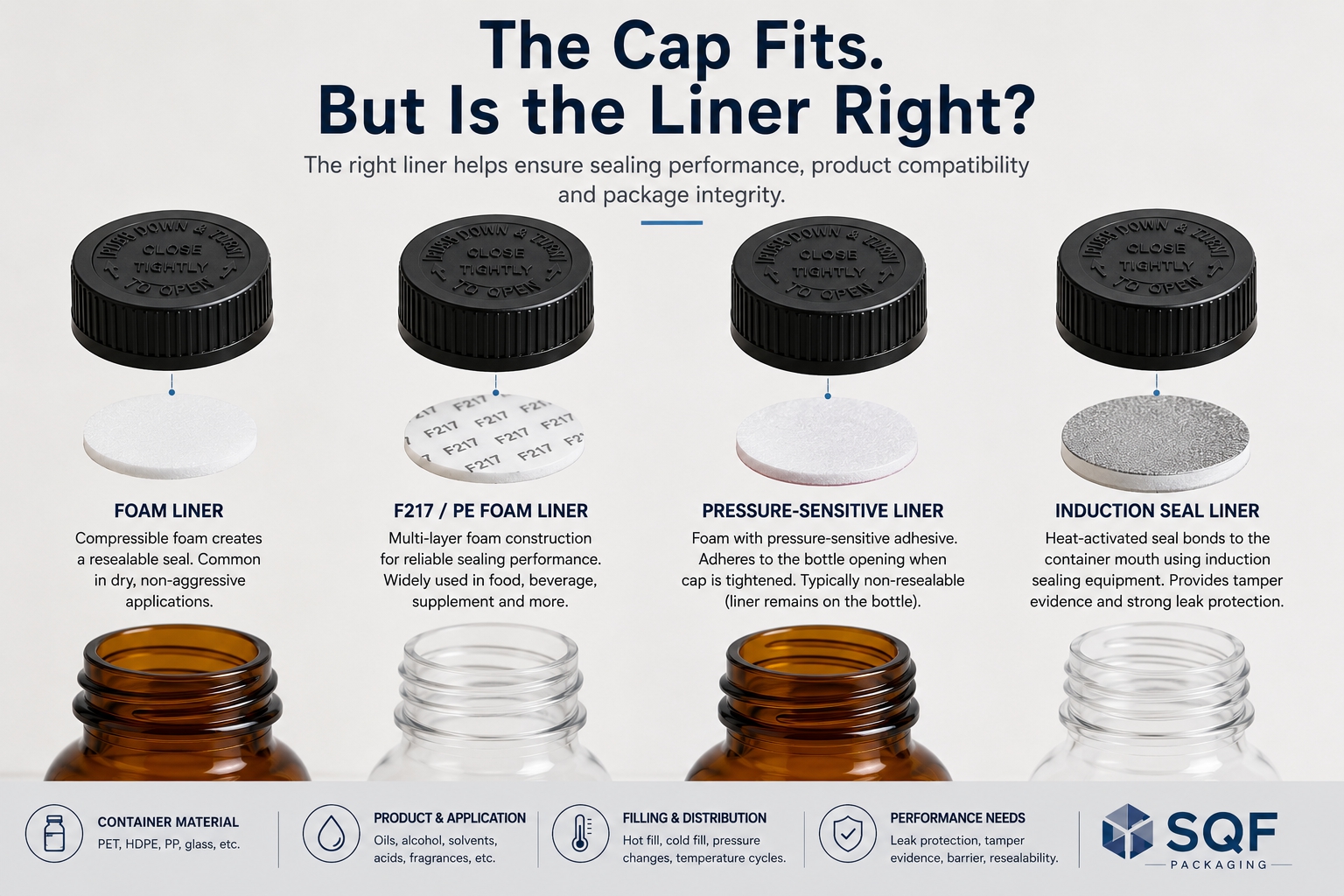
Depending on the application, a CR closure may also incorporate a liner or sealing component.
Possible sealing systems include foam liners, pressure-sensitive liners, induction-seal liners and other application-specific solutions.
The correct liner should be selected according to the packaged product and container rather than simply according to closure size.
Where Are CR Closures Used?
Child-resistant closures are used across a broad range of packaging applications, including pharmaceutical, nutraceutical, chemical, personal-care and other products requiring controlled-access packaging.
The exact closure specification should always be evaluated against the product, container and applicable market requirements.
Can CR Caps Be Customized?
Yes. Depending on the closure design and order quantity, customization can include:
Color matching, embossed or debossed top designs, opening instructions, logo customization, liner selection and packaging configuration.
For projects where an existing mold is suitable, using a stock closure platform can significantly reduce development cost and lead time compared with developing an entirely new closure.
Does a CR Cap Automatically Make a Package Child-Resistant?
No — and this distinction is important.
A closure described as a CR cap should not automatically be interpreted as meaning that every bottle-and-closure combination constitutes a certified child-resistant package.
Child-resistant performance relates to the complete packaging system, including the container, closure and their interaction. Regulatory and testing requirements also depend on the intended product and market.
For projects requiring formal child-resistant compliance, the complete package should therefore be evaluated and tested according to the applicable requirements.
How to Source the Right CR Closure
For a new project, the most useful starting point is usually the bottle neck drawing or an existing container sample.
From there, the sourcing process can move through:
closure matching → sample evaluation → fit and sealing testing → decoration/color confirmation → production validation
SQF Packaging can support both existing CR closure platforms and customized development, helping buyers evaluate available tooling before committing to unnecessary new mold investment.
A Broader CR Closure Range Can Make Sourcing Easier
CR closures are not a single product category with one universal specification.
A 20mm closure for a small bottle and an 89mm closure for a wide-mouth container can involve very different structures, sealing requirements and applications.
Having access to multiple CR closure platforms makes it possible to start with the container and application — rather than forcing a package to fit one available cap.
Looking for a specific child-resistant closure?
Send us your neck-finish drawing, bottle sample, required size and estimated quantity. SQF Packaging can help identify suitable existing CR closure options and evaluate customization when required.